Early Learning & Parenting Research

Starting Solids: A Calm, Research-Backed Guide to First Foods
Is my baby ready? Purees or finger foods? What about choking? A calm, evidence-based starting point for solids, including readiness signs, the truth about gagging, and smart first foods. Read more...
How Many Words Should a 12 to 18 Month Old Say? What the Research Actually Says
The normal range for early talking is wider than most parents think. Here is what is typical at 12 to 18 months, what counts as a word, and the signs that matter more than the count. Read more...
The 4-Month Sleep Regression: Why It Happens and What Actually Helps
If your baby suddenly started waking every hour around four months, you are not doing anything wrong. Here is what the research says is really happening, and what helps tonight. Read more...
The First 50 Words: Why This Toddler Milestone Matters More Than You Think
Vocabulary does not grow linearly. It accumulates slowly at first, and then it explodes. The first 50 words are the foundation that explosion builds on.Why 50 words is the milestoneChildren with 50 or more words by 24 months are significantly more likely to experience a vocabulary burst in the months that follow. The 50-word threshold appears to represent a tipping point at which children shift from individual word learning to more systematic language acquisition.What counts as a wordA word does not need to be pronounced correctly to count. It needs... Read more...
Is My Toddler Talking Enough? A Parent's Honest Guide to Speech Milestones
It starts as a quiet worry. Other toddlers seem to be saying more words. Your child is communicating — pointing, making sounds, clearly understanding everything — but the words are not there yet.Here is what you actually need to know.What the research says about speech milestonesSpeech development has wide natural variation. The American Speech-Language-Hearing Association and American Academy of Pediatrics use these approximate benchmarks: 12 months: first true words beginning to appear. 18 months: at least 10 words, pointing to communicate. 24 months: at least 50 words, beginning to combine... Read more...
Signs Your Child Might Have ADHD or Autism: What Parents Need to Know
Early signs of autism and ADHD in children — what parents should watch for, when to be concerned, and what to do if you suspect your child may be neurodivergent. Read more...
How to Teach Your Baby to Read: Pre-Literacy Skills That Actually Predict Success
The 5 pre-literacy skills that actually predict reading success — and how to build them through play and conversation before age 5. Read more...
How to Sleep Train Without Crying It Out: 4 Methods Compared
4 sleep training methods compared honestly — including what works, what doesn't, and which approach fits your family's temperament and timeline. Read more...
When Should My Baby Start Talking? Speech Milestones From Birth to Age 5
Complete speech milestone guide from birth to age 5. What to expect, when to be concerned, and what you can do to support language development at home. Read more...
Toddler Hitting and Biting: What It Really Means (And What to Do)
Toddler biting and hitting explained by developmental science. The 4 triggers, in-the-moment response scripts, and prevention strategies that actually work. Read more...
How to Teach Baby Sign Language: A Step-by-Step Starter Guide for Beginners
Baby sign language is one of the most evidence-backed tools parents have for reducing frustration during the pre-verbal window — and the research consistently shows it does not delay speech. But most parents give up within the first two weeks because they're not seeing results. That's almost always because of one of three common mistakes: starting too late, expecting too much too soon, or signing inconsistently. This guide walks through exactly how to start, what to sign first, and what realistic timelines look like. When to Start Baby Sign Language... Read more...
Toddler Sleep Schedule by Age: Exact Nap Times, Bedtimes, and Wake Windows That Work
The most common reason toddler sleep falls apart isn't habit, it isn't routine, and it isn't behavioral. It's the wrong schedule for the child's age. When wake windows are too long, cortisol builds up and overtiredness makes sleep harder — not easier. When nap timing is off, bedtime becomes a battle. When the schedule doesn't match developmental stage, nothing else works. This guide gives you the exact numbers — wake windows, nap counts, nap timing, and bedtimes — by age, based on current sleep science. How Sleep Changes in the... Read more...
Baby-Led Weaning: The Complete Beginner's Guide to Starting Solids with Confidence
The complete baby-led weaning guide for beginners — when to start, what to offer first, the gagging vs choking distinction every parent must understand, and the research behind BLW. Read more...
The 3-Day Potty Training Method: Exactly What to Do, Day by Day
The complete 3-day potty training method — what to do each day, what to expect, how to handle accidents and refusals, and what normal progress looks like in the weeks after. Read more...
30 Toddler Learning Activities That Build Real Skills (Not Just Keep Them Busy)
30 toddler learning activities organized by developmental skill — language, fine motor, math foundations, science thinking, and emotional intelligence. All doable at home with no special equipment. Read more...
40 Summer Family Traditions to Start This Week (Many of Them Tonight)
40 summer family traditions you can start this week — weekly rituals, bedtime traditions, food traditions, and tiny daily practices that cost nothing and stay forever. Read more...
Outdoor Learning This Summer: How Everyday Moments Build Remarkable Kids
Outdoor learning is one of the most powerful early childhood approaches — and it doesn't require classes or equipment. Here's how to turn this summer into a learning-rich season at every age. Read more...
50 Screen-Free Summer Activities for Toddlers and Kids (That They'll Actually Do)
50 screen-free summer activities for toddlers and kids organized by what your child actually needs — high energy, creative, sensory, imaginative, and together activities that actually work. Read more...
Is My Child Behind? The Honest Guide to Developmental Milestones (And When to Actually Worry)
Milestone anxiety is one of the most common parts of early parenting. Here's what developmental milestones actually mean, what the real ranges look like, and when something is genuinely worth following up on. Read more...
Beyond Gentle Parenting: How to Set Boundaries Without Losing the Connection
Gentle parenting burnout is real — and it usually comes from a misapplication of the philosophy, not the philosophy itself. Here's how to keep the warmth and add back the limits your child actually needs. Read more...
The Case for Boredom: Why Unstructured Play Is the Best Thing You Can Give Your Toddler
Unstructured play and boredom aren't problems to solve — they're among the most powerful developmental tools available to toddlers. Here's the neuroscience behind why, and how to protect space for it. Read more...
What Parenting Style Is Actually Right for My Family? The Honest Guide to Hybrid Parenting
Hybrid parenting — deliberately combining the strongest elements from multiple parenting philosophies — is what most thoughtful parents are actually doing. Here's the research behind it and how to build your own approach. Read more...
How Much Screen Time Is Too Much for Toddlers? What the Research Actually Says (And What to Do Instead)
The real answer on toddler screen time limits — what pediatricians recommend, what the research shows, and what to do instead that actually works. Read more...
Baby Sign Language Chart: The 20 Most Important Signs to Teach First
The 20 baby signs with the highest daily utility, in the order most parents find most effective. With exact hand movements, when to introduce each, and how to practice naturally. Read more...
Reading Readiness Signs: How to Tell If Your Child Is Ready to Read Before Kindergarten
The specific pre-literacy signs that tell you your child is building reading foundations — and what to do if they are not. Research-based, age-by-age, and honest. Read more...
Toddler Speech Delay Checklist: Signs to Watch For at 12, 18, 24 and 36 Months
A clear, age-by-age speech delay checklist from 12 to 36 months. Based on ASHA milestones. Print it, use it at checkups, and know exactly when to act. Read more...
Montessori at Home for Toddlers: What It Actually Means and How to Start
What Montessori at home actually means for toddlers, which principles have the strongest research support, how to implement them without buying expensive materials, and what to prioritize from birth through age 3. Read more...
Phonics for Preschoolers: What It Is, When to Start and How to Build It Through Play
When should preschoolers start phonics? What does research say about letter-sound instruction before kindergarten? Here is what phonological awareness is, why it comes before phonics, and how to build it through play from ages 2-5. Read more...
ADHD in Toddlers: Signs, Symptoms and What to Do If You Are Concerned
What ADHD actually looks like in toddlers versus typical development. The specific signs that warrant closer attention, why setting matters for diagnosis, what else could explain the behavior, and what to do if you have a concern. Read more...
Speech Therapy Activities for Toddlers at Home: 20 Research-Backed Ideas by Age
20 evidence-based speech therapy activities you can do at home with toddlers aged 12-36 months. Organized by age and built on the same research base used by speech-language pathologists in early intervention settings. Read more...
Baby Sleep Schedule by Age: Exact Wake Windows, Nap Times and Bedtimes from Newborn to 3 Years
Exact sleep schedules from newborn through 3 years. Wake windows, nap numbers, nap lengths, and target bedtimes at every developmental stage — built on sleep research so you stop guessing and start seeing results. Read more...
Toddler Tantrums: The Brain Science Behind Why They Happen and Scripts That Actually Help
Toddler tantrums are not manipulation or bad behavior. They are the result of a nervous system that is not yet equipped to regulate overwhelming emotion. Here is the brain science behind why tantrums happen, the three types of toddler tantrum, and exact scripts that actually help. Read more...
Kindergarten Readiness: What Actually Matters (It Is Not the Alphabet)
Most parents focus on letters and numbers. Research shows the skills that most powerfully predict kindergarten success are social-emotional regulation, oral language, and the ability to follow multi-step directions. Here is what the research says actually matters and how to build each domain. Read more...
The 4-Month Sleep Regression: Why It Happens and Exactly What to Do
The 4-month sleep regression is not a phase that resolves on its own. It is a permanent change in your baby's sleep architecture that requires action, not patience. Here is what actually changes neurologically at 4 months and exactly what to do about it. Read more...
Speech Delay vs. Autism: How to Tell the Difference in Toddlers
Not all speech delays are autism and not all autism involves obvious speech delay. Here is how to distinguish between the two profiles, what each looks like in toddlers, and the single most predictive question to help decide whether to pursue evaluation. Read more...
Potty Training Readiness: The 9 Signs Your Toddler Is Actually Ready (And 3 Signs That Don't Matter)
Age is not a potty training readiness indicator. Here are the 9 actual signs that predict training success, 3 signs that don't matter, and how to tell the difference between a child who is not ready and a child who is resisting. Read more...
Early Signs of Autism in Toddlers: What Parents Should Actually Look For (Ages 12-36 Months)
If something feels different about your toddler's social or language development, that instinct deserves a direct response. This guide covers the specific signs to watch for at 12, 18, and 24 months, what distinguishes autism from typical development variation, and exactly when and how to request an evaluation. Read more...
Baby Sign Language: When to Start, What to Teach First, and Does It Help Speech?
Baby sign language gives your child a way to communicate before they can speak — reducing frustration and building vocabulary. Here is exactly when to start, which signs to teach first, and what the research says about signing and spoken language development. Read more...
Sleep Training Methods Compared: Ferber, Chair, No-Cry and Extinction — What the Research Says
All four major sleep training methods have solid research support. The differences come down to your child's temperament, your tolerance for crying, and your child's age — not which method is 'correct.' This guide compares them honestly so you can choose what actually works for your family. Read more...
My Toddler Isn't Talking: What's Normal, What's a Red Flag, and When to Get Help
A clear guide to toddler speech milestones, the difference between speech and language delay, and when to ask your pediatrician for an evaluation. Read more...
What Actually Helps Toddler Brain Development: Separating Research From Hype
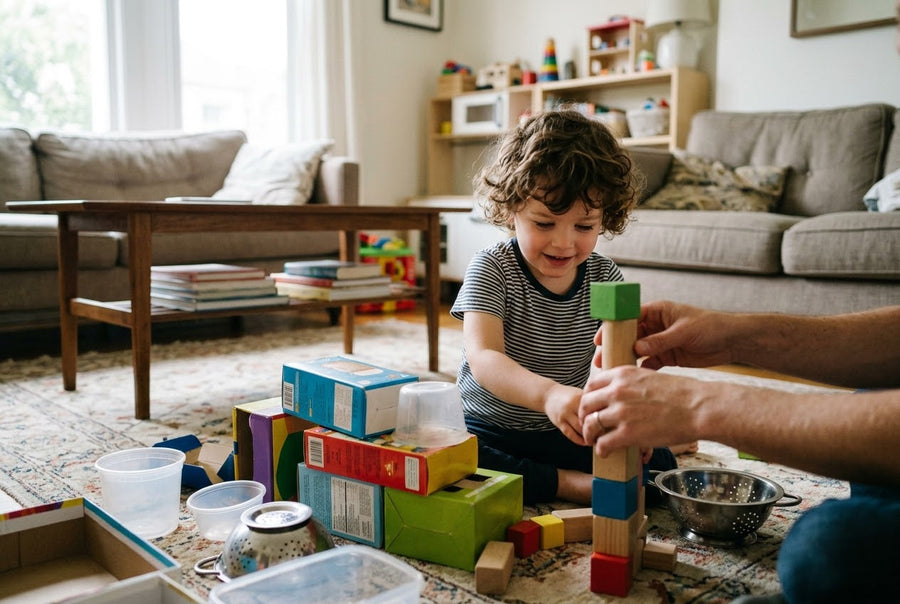
The toy aisle is full of products promising to make your toddler smarter. Most don't. Here's what early childhood research actually identifies as the things that matter — most of which cost very little or nothing at all.Responsive conversationThe single strongest predictor of a child's vocabulary and cognitive development isn't any toy or program — it's the number of back-and-forth conversational turns they have with a responsive adult each day. Not talking at them. With them. Ask a question, wait, respond to what they say, build on it. This is... Read more...
5 Things That Actually Help Toddler Speech Development (And 3 That Don't)
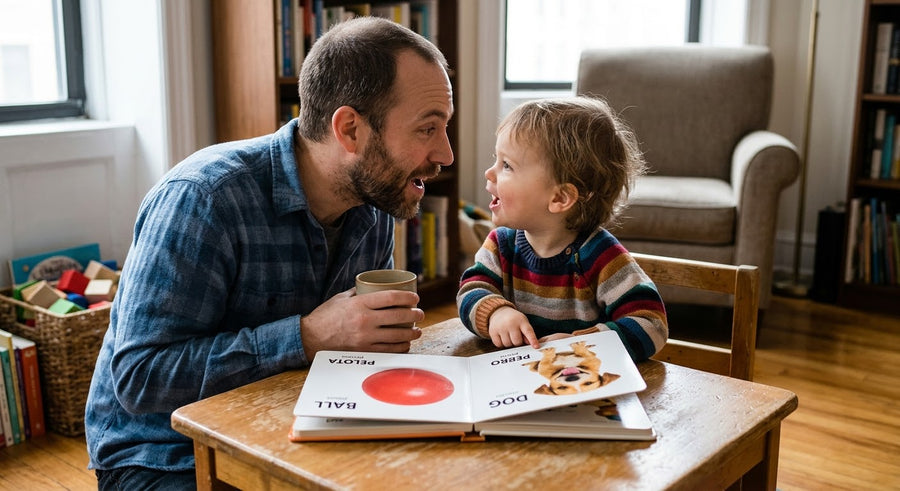
Every parent wants to support their toddler's speech development. Most don't know where to start — or worse, start with activities that feel productive but don't actually build the skills underneath. Here are five things that genuinely move the needle, grounded in early childhood research.1. Narrate what you're doing, not what they should say"Say banana" is a prompt. "Here's a banana — yellow, smooth, we peel it like this" is language input. Toddlers learn new words through repeated, meaningful exposure in real contexts, not through drills. When you narrate your... Read more...
Why Body Parts Are a Toddler's Easiest First Words — And How to Build On That
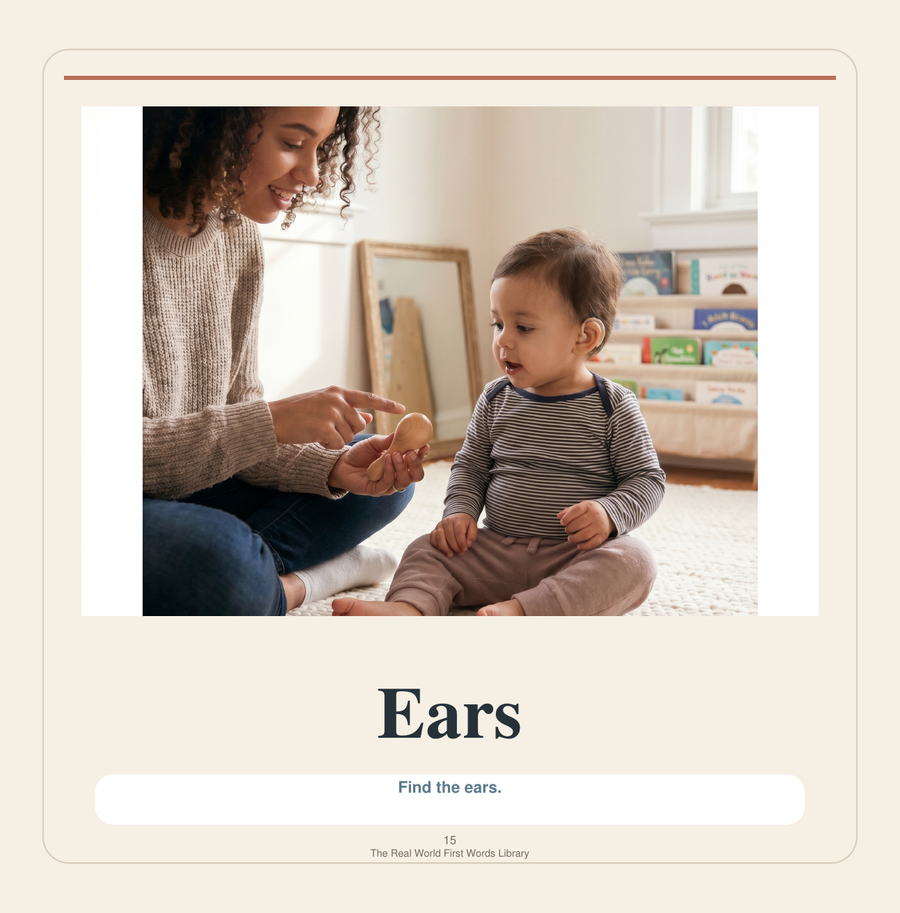
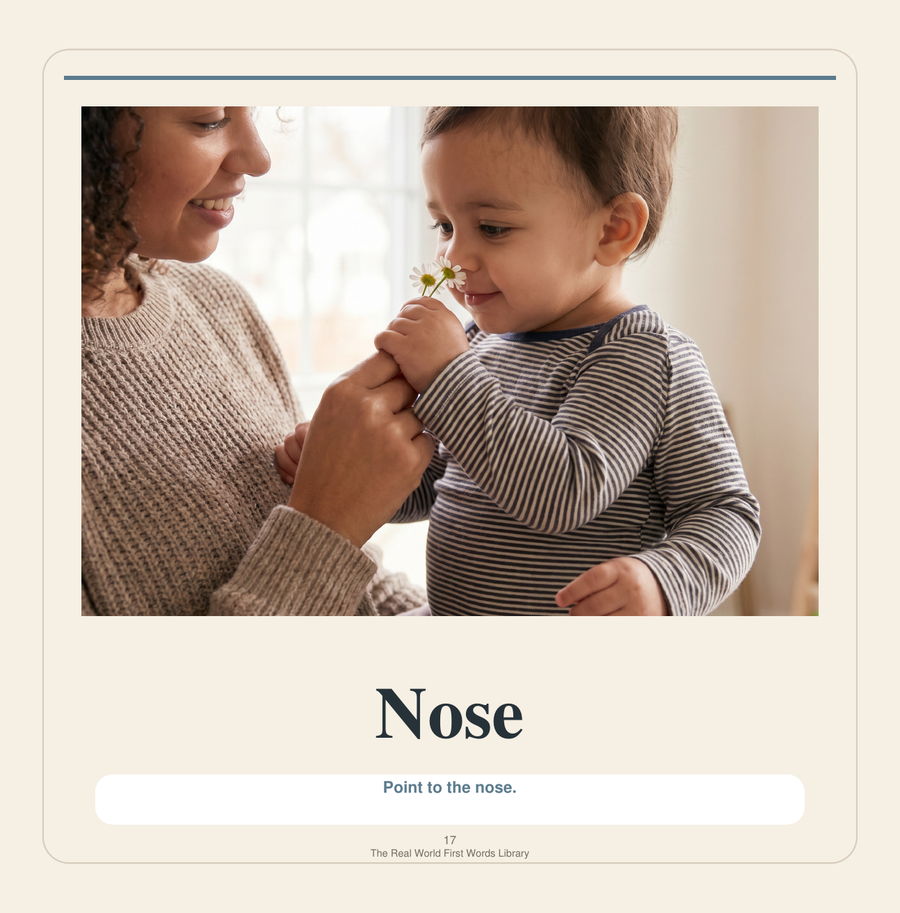
Ask most parents what their toddler's early words were, and body parts come up constantly — nose, ear, belly, toes — often before far more "useful" words. There's a simple reason body-part words tend to come early and stick: nothing else gets pointed at, touched, and named quite as often.Why body parts have an unfair advantageVocabulary builds fastest around words that get repeated in real, physical context — not words that get repeated the most in isolation, like on a flashcard. A toddler's own body goes everywhere with them, gets... Read more...
How Many Words Should Your 2-Year-Old Have? What Speech Research Actually Says
It's one of the most common questions parents search at 2am: "how many words should my toddler have by now?" The honest answer is that exact word counts matter less than the patterns underneath them — but the patterns are worth knowing.The shape of normal vocabulary growthThe American Speech-Language-Hearing Association (ASHA) publishes communication milestone checklists by age, built from peer-reviewed research, and they're framed deliberately as a general roadmap rather than a strict pass/fail test — every child develops at their own pace, even within the same family. A few... Read more...
Teaching Toddler Colors: Why Flashcard Drilling Backfires (And What the Research Says Works)
The usual approach to teaching a toddler colors is to hold up a card and ask them to say the color back. It feels productive, but it often skips the step that actually has to come first — and skipping it is why so many toddlers seem to "know" colors one day and forget them the next.Receptive before expressiveLanguage development has a well-established order: children understand far more than they can say, for every word and every concept, not just colors. A toddler usually recognizes "the red one" correctly long... Read more...
When Do Toddlers Actually Learn to Count? (Reciting Numbers Isn't the Same as Understanding Them)
Most toddlers can recite "one, two, three, four, five" well before they turn two. Parents understandably take this as a sign their child can count. It usually isn't — and the gap between reciting numbers and actually understanding them matters more than it sounds like it should.Reciting the number sequence is a memorized chant, the same part of the brain that learns the alphabet song. Counting, in the way that actually matters for math later on, requires something different: knowing that the last number you say when you count a... Read more...