
Memorizing a circle on one flashcard does not automatically mean a child will recognize circular structure when the object, color, material, or setting changes.
Kala Early Learning Library
My First Words · Book 6
My First Shapes: Real-Photo Shape Learning for Toddlers Ages 1 to 3
Help a toddler see the shape inside the object, then find it again in the real world.
Ages 1 to 3
Look Inside available
Available on AmazonAmazon is the purchase source of truth for current price, format, stock, shipping, delivery, and returns.
View this book on Amazon
Why families open this book
A circle is easier to understand when it stops being only a diagram and becomes something a child can recognize in the real world.
My First Shapes uses clean real photographs to help toddlers ages 1 to 3 notice circles, squares, triangles, and other shapes inside familiar objects. Each page reduces visual clutter so the geometric property is easy to see, while the real object keeps the idea connected to everyday life.
Why this book exists
Young children can learn a shape name from a flashcard without yet recognizing that same shape when the color, size, material, or object changes. The more useful skill is noticing the structure across different examples.
From the page to the room
A red ball can show a circle. A blue block can show a square. A green block can show a triangle. Once the child sees the idea, the grown-up can look around the room and ask where else that shape appears.
Part of the My First Words collection, extending real-photo learning into early spatial thinking.
Why this book
A book should have a reason to exist.
Clear real-object photographs isolate familiar shapes, giving children a concrete starting point for recognizing the same geometric idea across everyday life.
The red ball is not the definition of circle. It is one example of circular form. The blue block is not square because it is blue. The green triangle remains a triangle even when its color changes. My First Shapes makes those distinctions visible, then invites the child to carry the idea off the page.
Real objects connect abstract geometric language to things a toddler can recognize.
Clean uncluttered pages make the defining shape easier to notice.
The book naturally extends into shape hunts around the home, classroom, or neighborhood.
Look inside
See what you are actually getting.
Preview imagery is drawn from this title’s verified book media. No substitute pages and no invented interiors.
Inside the idea
Designed for the moment you are reading together.
A clear reading rhythm
Each page names one shape and shows it clearly through a real object against a simple background. The grown-up can name the shape, trace its outline in the air, then look for another example in the child’s environment.
Something worth noticing
Circles, squares, triangles, shape names, visual comparison, spatial noticing, and the idea that the same shape can appear in different colors, materials, sizes, and objects.
Useful without pressure
After the page, look for the shape somewhere real. Avoid asking only ‘What shape is this?’ Try ‘I see a circle on the plate. Can you find another circle?’ The goal is recognition across examples, not one-card memorization.
Continue the path
One book can open the next question.
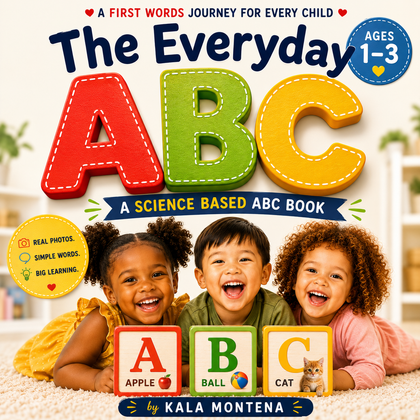
Read next
Everyday ABCs: Letters, Sounds & Familiar Words
Continue with the next logical book in this learning path.
See the next book → First Words: The Teaching Edition | Babies & Toddle...
 Everyday ABCs: Letters, Sounds & Familiar Words
 First Words That Matter: 20 Core Words for Late Tal...
 My First Sentences: Everyday Phrases for Toddlers A...
 My First Sentences: Everyday Routines for Toddlers ...
 My First Words Series 2: Real-Photo Vocabulary for ...
 My First Numbers: Real-Photo Number Learning for To...
Real book contentProduct copy and previews are tied to the actual title.
Age guidance, not assessmentKala resources are educational and do not diagnose or predict an individual child.
Amazon is purchase truthAmazon controls current price, stock, shipping, delivery, and returns for Amazon titles.
Pricing
Pricing on request
This title is available to buy on Amazon, where current price, format and delivery are shown. For school, nursery, library or wholesale orders, please get in touch and I will send pricing and availability for the titles you need.