
Children often learn that nocturnal animals are simply ‘awake at night.’ That label does not explain how an animal navigates, communicates, hides, hunts, sleeps, or keeps time when vision and daylight work differently.
Kala Early Learning Library
Animals · Book 7
Animals: Night
Darkness is not an empty world. It is a world that rewards different senses.
Ages 4 to 6
Digital Edition
Look Inside available
Verified Amazon link coming soonKala does not send families to an unverified marketplace listing.
Return to the Library
Why families open this book
When a child’s day gets quiet, another animal world is becoming active.
Animals: Night is a real-photo science book for children ages 4 to 6 about the senses, signals, sleep, timing, and behavior that make darkness usable instead of empty.
A bat can build a picture through sound. A moth carries signals across its body. Animals sleep in ways that challenge human assumptions, and biological clocks keep working even when the sun is gone. The night is not simply daytime with less light. It is a different set of problems, and animals have evolved different ways to solve them.
Why this book matters
Night-animal books often become lists of “nocturnal animals.” Kala goes one layer deeper. The child sees what the animal does, opens the mechanism behind it, then gets a question that leaves room for wonder.
- Genuine interior photography and real animal images
- 16 night-centered words and encounters
- Echolocation, signaling, animal sleep, sensory adaptation, timing, and darkness
- Caregiver science notes
- Wonder questions designed for conversation rather than testing
Animals, Book 7 of 8. Every animal knows something you don’t.
Why this book
A book should have a reason to exist.
Real animal imagery and sixteen night-centered encounters show children how darkness changes the problem, then how bodies and behavior change to meet it.
A bat can turn sound into spatial information. A moth can carry visual signals written across tiny scales. Sleep itself looks different across species, and internal clocks keep time in bodies that do not experience the night the way humans do. Animals: Night turns darkness from a backdrop into a scientific condition.
Moves beyond the label nocturnal into sensory biology, signaling, sleep, and animal timing.
Verified genuine interior previews show the real visual experience before purchase.
Makes nighttime curiosity useful for science without making darkness frightening.
Look inside
See what you are actually getting.
Preview imagery is drawn from this title’s verified book media. No substitute pages and no invented interiors.
Inside the idea
Designed for the moment you are reading together.
A clear reading rhythm
The volume uses the Animals series rhythm: real photograph, specific behavior, the mechanism inside it, a second visual encounter, then an open wonder question. The child moves from seeing a night animal to asking how its body makes darkness usable.
Something worth noticing
Bats, moths, sound, echolocation, scales, signals, darkness, animal sleep, dreams, biological timing, sensory adaptation, and other night behaviors give children a vocabulary for life after daylight.
Useful without pressure
Connect the book to ordinary night experiences. Listen before looking. Notice moths near light, animal sounds, shadows, temperature change, or the child’s own sense of time before sleep. Use the questions to make darkness observable rather than mysterious in a frightening way.
Continue the path
One book can open the next question.
Read next
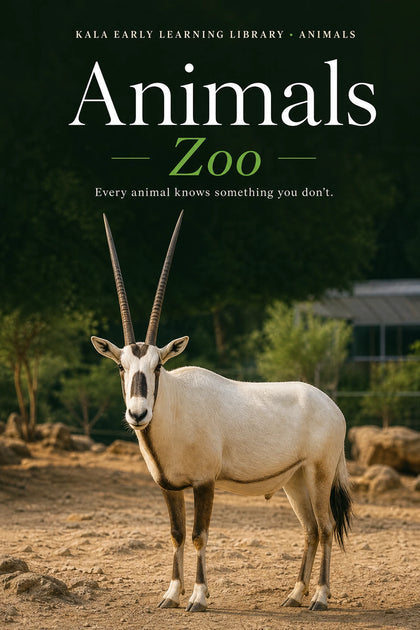
Explore the complete Animals collection →Animals: Zoo | Digital Edition
Continue with the next logical book in this learning path.
See the next book → Animals: Sea
 Animals: Zoo
 Animals: Sky
 Animals: Pet
 Animals: Wild
 Animals: Jungle
 Animals: Underground
Real book contentProduct copy and previews are tied to the actual title.
Age guidance, not assessmentKala resources are educational and do not diagnose or predict an individual child.
Amazon is purchase truthAmazon controls current price, stock, shipping, delivery, and returns for Amazon titles.
Pricing
Pricing on request
For pricing on this title, including school, nursery, library and wholesale orders, please get in touch and I will come back to you with figures and availability.